I Tried Heart-Brain Coherence, What I Didn’t Expect Was To Be Confronted By My Own Spiritual Life.
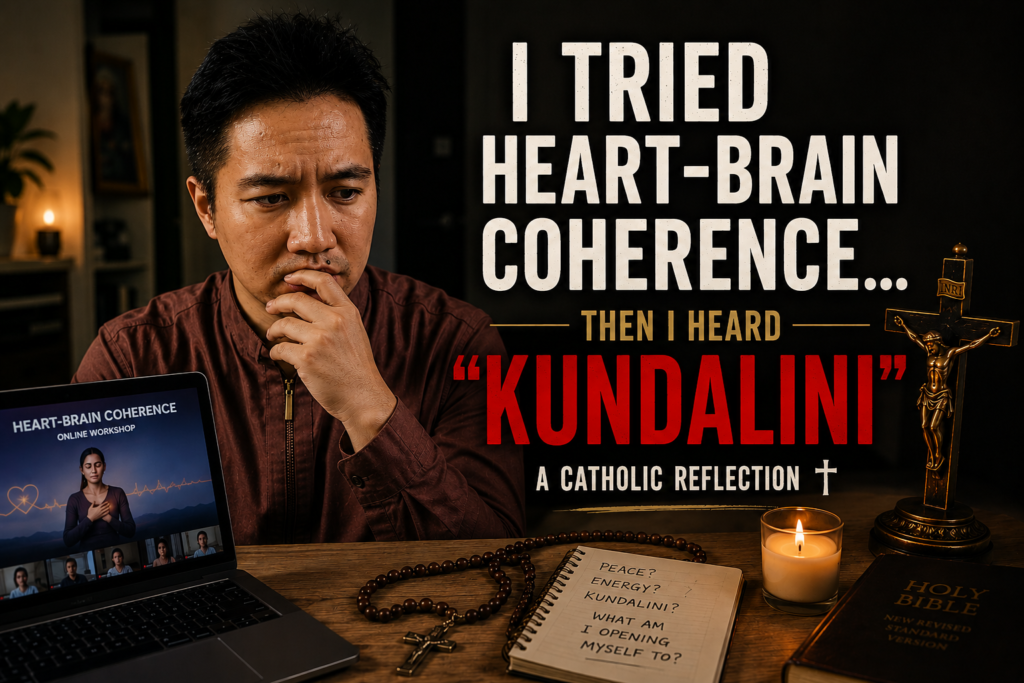
A few nights ago, I found myself sitting in front of my laptop waiting for an online Heart-Brain Coherence workshop to begin. Looking back now, it still feels slightly strange that I was there at all, because if someone had asked me a year ago whether I would spend my evening attending a meditation-related Zoom session, I probably would have said no without giving it much thought. Not because I was against the idea, but because it simply wasn’t something that occupied much space in my life.
The Reason I Joined
The funny thing is that the decision had very little to do with spirituality in the beginning. I wasn’t searching for a new spiritual practice. I wasn’t feeling lost. I wasn’t looking for some hidden secret that would suddenly transform my life.
In fact, the reason I joined was surprisingly practical. Over the past year, I have been spending a lot of time thinking about experiences, hospitality, tourism, and what people are really searching for when they travel. On the surface, it often looks as though people are simply looking for a holiday, but the more I observe the industry, the less convinced I am that relaxation is the primary thing people are buying.
Somewhere along the way, people stopped searching merely for places and started searching for experiences. Then even experiences stopped being enough. Increasingly, it seems as though people are searching for feelings they struggle to describe.
They want rest, but not merely sleep. They want peace, but not merely silence. They want healing, but often cannot explain what exactly needs healing. They want to feel connected to something larger than themselves, even if they don’t have the language to articulate what that something is.
Perhaps that’s why wellness has become such a powerful industry. Everywhere I look, I see some version of the same promise appearing under different names. Wellness retreats. Mindfulness programmes. Breathwork sessions. Meditation workshops. Sound healing. Forest therapy. Spiritual retreats. Digital detox experiences. Sometimes the language changes, but the underlying desire often feels remarkably similar.
At some point I realised that I had developed opinions about many of these things without actually experiencing them myself. That bothered me more than I expected. One of the dangers of working in business is that it becomes very easy to evaluate everything from a distance. We analyse trends. We study markets. We read reports. We look at numbers. Yet some things cannot be understood through a spreadsheet. Certain experiences have to be lived before they can be evaluated properly.
That thought eventually led me back to a meditation group that a friend had invited me to join quite some time ago. I can’t even remember exactly when I joined. It may have been months ago. It may have been longer. What I do remember is accepting the invitation because the topic genuinely interested me, fully intending to participate, and then proceeding to do almost nothing with it.
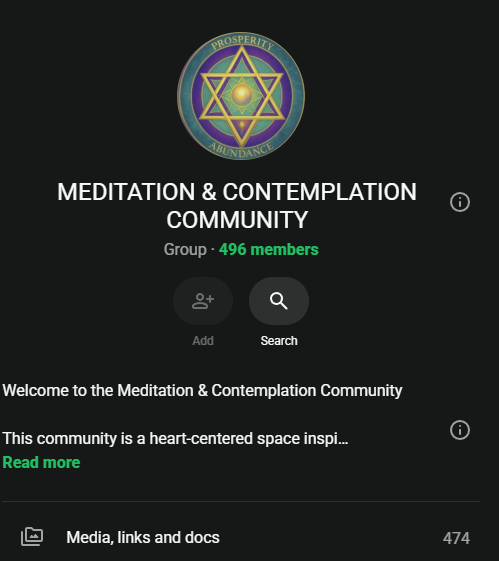
The group became one of those things that quietly lived inside my phone without really becoming part of my life. Messages would appear every now and then. Someone would share a reflection. Someone would announce an upcoming session. Occasionally there would be conversations about healing, meditation, emotional wellbeing, or personal growth. Every so often I would scroll through the messages, find something interesting, and tell myself that I should probably attend one of the sessions in the future.
The future, however, has a habit of never arriving.
For a long time I told myself that I was simply too busy. Looking back, I think that explanation deserves a little scrutiny. Busy has become one of those words we use so often that it no longer means anything. Everyone is busy. Every person I know is carrying responsibilities, deadlines, commitments, family concerns, unfinished projects, and a thousand other things competing for attention. The truth is that I probably had enough time to join a session if I genuinely wanted to. What I lacked wasn’t time. What I lacked was urgency.
And yet my curiosity never disappeared.
If anything, it slowly grew in the background.
Part of that curiosity came from following Joe Dispenza’s work over the years. I hesitate to describe myself as a follower because that word carries a level of commitment that doesn’t quite fit. I have never attended one of his retreats. I’ve never considered myself part of his community. At the same time, I have spent enough hours listening to his interviews, watching discussions online, and hearing stories from people influenced by his work that it would be dishonest to pretend he played no role in shaping my interest in these topics.
What fascinated me was not necessarily the conclusions he reached but the questions he seemed willing to ask. Questions about healing. Questions about the relationship between thoughts and emotions. Questions about stress, trauma, belief, and the extraordinary complexity of the human person. Whether one agreed with all of his answers almost seemed secondary to the fact that he was exploring territory most people never spend much time thinking about.
Perhaps those questions resonated with me because cancer had already forced me into similar territory years earlier.
One of the strange things about surviving cancer is that people often assume the experience leaves you with answers. In my own experience, it left me with far more questions than answers. Before cancer, healing was something I associated primarily with medicine. You became sick. You sought treatment. Doctors did what doctors do. The outcome was largely determined by biology, science, and whatever treatment options were available.
Then life becomes more complicated.
When mortality stops being an abstract concept and starts becoming part of your personal story, your relationship with certain questions begins to change. You become curious about things you previously ignored. Hope becomes more interesting. Fear becomes more interesting. Faith becomes more interesting. You begin noticing that two people can walk through seemingly similar circumstances and emerge profoundly different on the other side. You begin wondering how much of the human experience exists beyond what can be measured by blood tests, scans, and medical reports.
I don’t claim to have answers to those questions. In many ways, I feel less certain today than I did when I was younger. What I do know is that those questions never fully left me. They remained somewhere in the background, quietly influencing the books I read, the conversations that interested me, and the ideas that caught my attention.
Perhaps that’s why I never left the meditation group.
I wasn’t actively participating.
I wasn’t attending sessions.
I wasn’t practicing meditation.
Yet something about the conversation continued pulling at my curiosity from a distance. Maybe I wanted to understand what people were experiencing. Maybe I wanted to understand why so many people seemed drawn to these practices. Maybe I was searching for answers to questions I hadn’t fully articulated even to myself.
Whatever the reason, when the workshop invitation appeared a few days ago, I finally clicked the registration link.
At the time, it felt like a very small decision. One evening. One Zoom session. One opportunity to learn something new.
I had no idea that the most important thing I would encounter that night would have very little to do with Heart-Brain Coherence itself.
The Evening I Finally Showed Up
When the evening finally arrived, I joined the Zoom session with a kind of quiet curiosity that felt different from the way I usually consume these topics. Most of the time, when I listen to someone like Joe Dispenza or watch conversations about meditation, healing, stress, and the mind-body connection, I am doing something else at the same time. I might be driving. I might be walking. I might be letting a video play in the background while my attention is split between the speaker, my phone, and whatever unfinished thought happens to be occupying my mind that day.
This time was different.
I wasn’t listening to a recording. I wasn’t watching someone else’s testimony from a distance. I was actually entering a live session, with real people, at a specific time, for a practice I had spent years circling around without ever properly stepping into.
There was something slightly uncomfortable about that, though I don’t think I recognised it immediately. Observing something from a distance always feels safer than participating in it. When you observe, you remain in control. You can pause the video, skip the part you don’t like, dismiss the speaker, or move on to something else.
Participation asks something different from you.
It requires you to sit still long enough to let the experience happen, and perhaps that was one reason I had postponed joining anything like this for so long. It wasn’t because I had no interest. The interest was clearly there. It had been there for years. But interest is easy when it doesn’t demand anything from you.
The session began in a fairly ordinary way. There was no dramatic atmosphere, no strange ritual, no immediate sense that I had entered anything unusual. It was simply an online gathering, and perhaps that made it easier for me to relax into it.
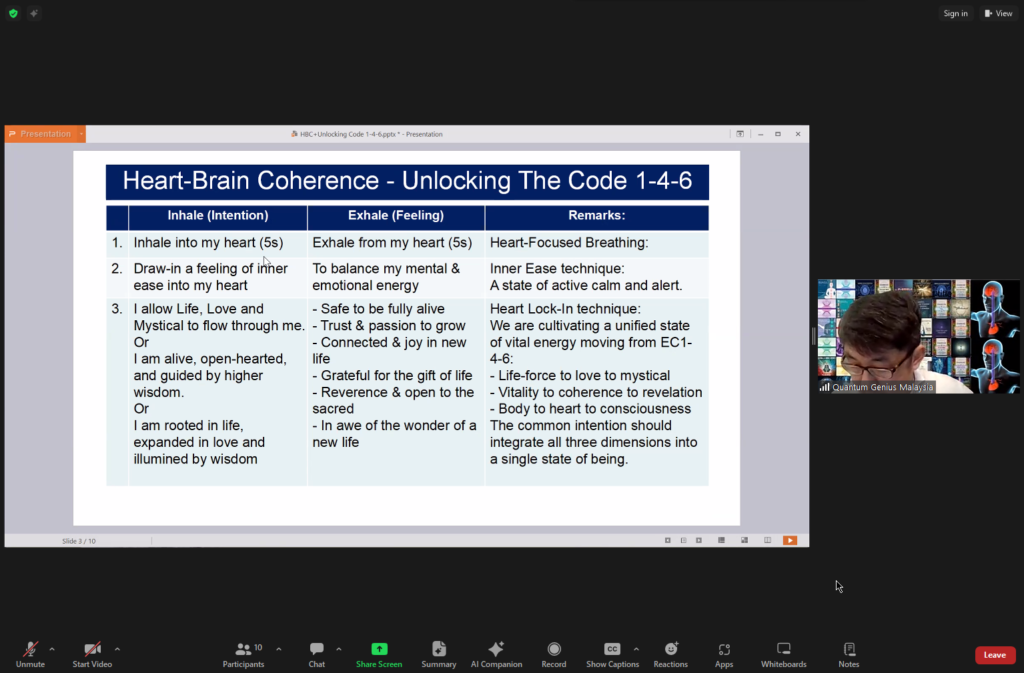
The facilitator started speaking about Heart-Brain Coherence, and much of what was shared at the beginning sounded familiar enough for me to follow without resistance. There were references to stress, emotions, gratitude, the heart, the mind, and the way our internal state affects how we experience life. None of that felt strange to me.
If anything, those were subjects I had already been thinking about for years in different forms, even if I had never placed them under the label of Heart-Brain Coherence.
As I listened, I remember feeling that some of it made sense. That doesn’t mean I had accepted everything being taught, because at that stage I wasn’t even thinking in those terms. I wasn’t there to judge yet. I wasn’t there to defend anything yet.
I was simply listening.
There are moments when a person can hear something and recognise part of it as true even before knowing what to do with the rest. The idea that gratitude affects us deeply did not feel foreign to me. The idea that stress shapes the body did not feel foreign either.
The idea that a person can spend years living from fear, anxiety, or survival mode also felt believable, not because I had studied it academically, but because I had lived enough of life to recognise how easily the body remembers what the mind tries to move past.
When the breathing exercise began, it was much simpler than I expected. We were guided to breathe in slowly for five seconds and breathe out slowly for five seconds, without holding the breath or forcing anything.
If someone had explained it to me beforehand, I might have wondered why something so simple needed to be taught in a workshop. Yet as I actually sat there and followed the rhythm, I began to understand that simple does not always mean easy, and it certainly does not always mean useless.
There was no elaborate technique to master, no complicated posture, no need to imagine myself becoming some enlightened version of myself. It was just breathing in and breathing out, slowly enough for the body to realise that it did not have to rush.
For a few minutes, I found myself noticing how rarely I breathe that way.
Most of the time, breathing is just something that happens in the background while the rest of life takes over. I don’t think about it. I don’t pay attention to it. I certainly don’t treat it as something sacred or even important.
Yet the moment I slowed it down, I became aware of how much noise had been living inside me that evening.
There were unfinished tasks somewhere in the back of my mind. There were messages I had not replied to. There were plans and responsibilities and small worries that had followed me into the session without asking permission.
They did not disappear, but they moved slightly further away, as though the act of breathing slowly created a little more space between me and the usual pressure of the day.
That part surprised me.
It wasn’t dramatic, and I don’t want to pretend that it was. I did not have some extraordinary mystical experience. I did not suddenly feel transformed. I was not overwhelmed by peace or flooded with emotion.
What I experienced was much quieter than that.
The room around me felt the same. My laptop was still in front of me. The workshop was still continuing. But internally, there was a small shift, the kind that might be easy to overlook if I had been rushing.
For once, I wasn’t trying to produce anything, solve anything, respond to anything, or plan the next thing. I was simply present enough to notice my own breath, and perhaps that was why the exercise felt more valuable than I expected.
While I was sitting there, I could also understand why a resort guest might appreciate something like this. That thought entered naturally because work was still part of the reason I had joined in the first place.
I imagined someone arriving tired, not necessarily in a dramatic way, but in the ordinary way many people are tired now. The kind of tiredness that comes from work, family, constant messages, financial pressure, health worries, and the feeling that life keeps moving faster than the soul can follow.
I could imagine someone sitting in a quiet space, being guided to breathe slowly, and realising for the first time in days or weeks that they had not truly stopped.
From that perspective, I could see the value. I could see why people were drawn to it. I could see why wellness programmes had become attractive to people who were not merely looking for luxury, but for some kind of pause.
At that point in the evening, nothing in me was resisting the experience. If anything, I was more open to it than I had expected to be.
I remember thinking that perhaps I had delayed joining these sessions for too long, and that maybe there were useful things here that I had been judging too quickly from the outside. The beginning of the workshop did not feel threatening. It did not feel strange.
It felt practical, gentle, and surprisingly human.
That might be why the shift that happened later affected me more deeply than it would have if I had entered the session already suspicious. My guard was not up. I was not looking for problems.
I was simply sitting there, breathing slowly, listening, and allowing myself to experience something I had spent years only observing from a distance.
When Something In Me Became Alert
Somewhere later in the session, something changed for me.
It was not dramatic at first. The workshop was still continuing in the same calm and gentle way. The facilitator was still guiding the session. I was still sitting in the same place, in front of the same laptop, breathing and listening the way I had been listening since the beginning.
But then a word was mentioned.
Kundalini.
I cannot remember the full sentence now. I wish I could, because I know that when writing about something like this, details matter. I do not want to exaggerate the moment or make it sound more intense than it actually was.
What I remember clearly is not the sentence.
I remember my reaction.
The moment I heard that word, something in me became alert. Not frightened in a dramatic way. Not angry. Not offended. Just alert, as though a small part of me suddenly stopped relaxing and started paying closer attention.
Before that moment, I had been receiving the session mainly as a wellness practice. The breathing made sense to me. The focus on gratitude made sense to me. Even the idea that our emotional state affects the body did not feel strange, because I had already spent years thinking about those things in different ways.
But kundalini felt different.
I had heard the word before, though I would not pretend that I knew everything about it. It was one of those terms I had encountered somewhere along the way, probably through videos, interviews, or conversations around meditation and energy work. I knew enough to recognise that it did not come from the Catholic world I belonged to.
That was enough to make me pause internally.
The workshop continued, but I was no longer experiencing it in quite the same way. A few moments earlier, I had been thinking about how useful slow breathing could be for people who needed to calm their bodies and quiet their minds. Now I found myself wondering what exactly was being introduced alongside the breathing.
At first, I tried not to overreact.
I told myself that perhaps it was just a term. Perhaps it was just part of the language used in that community. Perhaps I was being too sensitive because of my faith. Perhaps I was hearing something unfamiliar and immediately becoming cautious because it did not sound Christian.
I have to be honest about that because I do not want to pretend that my first reaction was perfectly clear or perfectly holy.
It was not.
It was mixed.
Part of me was uncomfortable. Another part of me was trying to explain the discomfort away. I did not want to become the kind of person who rejects everything outside my own tradition without first trying to understand it.
Then the session moved further into language around energy centres.
Again, I cannot remember every phrase exactly. What stayed with me was the direction of the language. Energy flowing. Energy being drawn from within. Something being activated or moved through the body.
That was when the discomfort became harder to ignore.
The breathing itself had not changed. I was still being asked to inhale and exhale. My body was still responding to the slower rhythm. On the surface, everything looked the same.
But internally, the meaning had changed.
It no longer felt like I was only participating in a breathing exercise. It felt as though the breathing had become attached to a spiritual framework I did not fully understand and could not simply accept without question.
That was the part that bothered me.
Not the breathing.
The source.
What exactly am I drawing from?
What exactly am I opening myself to?
What exactly is being invited into this practice?
Those questions did not come to me in a neat way. They came quietly, one after another, while the facilitator continued speaking and while everyone else seemed to continue normally. I was still in the session, but something inside me had taken a small step back.
It is difficult to explain that kind of discomfort without sounding extreme.
Because nothing obviously frightening happened.
Nobody said anything that sounded intentionally dark. Nobody tried to force anything on me. Nobody seemed to have bad intentions. In fact, I still believe most people in that space were sincerely searching for peace, healing, and a better way to live.
That is what made it more difficult.
If something looks obviously wrong, the decision is easy. You reject it and move on. But when something appears gentle, helpful, and even beautiful in certain parts, the line becomes less obvious.
For a while, I kept listening while trying to understand my own reaction.
Was I being cautious?
Was I being fearful?
Was I being religious in a rigid way?
Or was this the Holy Spirit quietly telling me to pay attention?
I did not know the answer yet.
All I knew was that the peace I had felt earlier was no longer simple.
The session had started as something practical and human. Breathe slowly. Become present. Notice the heart. Feel gratitude. Those things did not trouble me.
But once kundalini and energy centres entered the conversation, I could not pretend that the practice was spiritually neutral anymore.
At least not for me.
Maybe another person would have heard the same words and felt nothing. Maybe someone without a Christian background would have accepted it as part of the process. Maybe even some Christians would have brushed it aside and said that all language is just language as long as the intention is good.
But I could not do that.
Not honestly.
Something in me knew that intention alone was not enough.
A person can sincerely search for healing and still open the wrong door. A person can sincerely desire peace and still receive it from a source that does not lead them closer to God. A person can sincerely mean well and still be spiritually careless.
I was not ready to make a final judgement on the entire workshop.
But I could no longer participate with the same openness I had earlier.
My body was still there, but my spirit had become cautious.
I kept listening until the end, but I was listening differently now. I was no longer simply asking whether the practice worked. I was no longer only thinking about whether this could be useful for wellness programmes or resort guests.
I was asking whether this was something I could personally receive as a Catholic.
By the time the session ended, I was not angry. I was not even fully certain how to explain what I felt. But I knew that something had shifted in me, and I knew I could not simply close the laptop and move on as though nothing had happened.
The breathing had calmed my body.
But the language had disturbed my spirit.
And that contradiction stayed with me.
After The Zoom Call Ended
After the session ended, I did not immediately know what to do with what I had felt.
I did not close my laptop feeling angry. I did not feel the need to message anyone from the group or start debating whether the workshop was right or wrong. In fact, part of me still felt grateful that I had attended, because the first half of the session had shown me something useful about breathing, stillness, and how quickly the body can respond when it is given permission to slow down.
But the discomfort remained.
It stayed there quietly after the Zoom window closed, the way certain conversations stay with you even after everyone has gone home. The room around me had not changed. The evening looked the same as it had before the workshop began. But internally, I was no longer in the same place.
I kept thinking about the word kundalini.
Then I kept thinking about energy centres.
Then I kept thinking about how easily I had almost accepted the entire thing because the beginning felt so harmless.
That was the part that bothered me most.
If the session had started with something obviously strange, perhaps I would have dismissed it quickly. But it did not begin that way. It began with breathing, gratitude, emotional awareness, and calmness. It began with things that felt useful and even good.
That made the whole thing more complicated.
For a while, I sat with the tension instead of trying to resolve it too quickly. A part of me still wanted to be fair. I did not want to turn one uncomfortable moment into a dramatic conclusion about everything I had experienced. I also did not want to accuse people who were probably sincere in their intentions.
At the same time, I could not ignore the fact that something in me had reacted strongly.
Not emotionally.
Spiritually.
There is a difference between not liking something and sensing that something is not right for your soul. I have disliked many things in my life for reasons that had nothing to do with God. This felt different. It felt quieter, deeper, and harder to explain.
Eventually, the question became very simple.
Could I keep the breathing and remove the parts that troubled me?
Could I take what seemed physically helpful and place it under Christ instead?
That thought interested me because it shifted the whole experience. Instead of asking whether I should reject the entire practice outright, I began asking whether the basic rhythm of slow breathing could be redirected toward prayer. After all, breathing itself was not the problem. God created the body. God created the nervous system. God created breath.
The problem was not breathing in and breathing out.
The problem was what the breath was being connected to.
So I started wondering what would happen if the focus changed completely. What if, instead of drawing from kundalini energy, I invited the Holy Spirit? What if, instead of energy centres, I focused on the Sacred Heart of Jesus? What if, instead of allowing some unknown force to flow through me, I prayed for the Precious Blood of Jesus to cover, cleanse, and renew me?
At first, it sounded simple.
Almost too simple.
Just replace the words.
Keep the breathing.
Make it Catholic.
But as I started forming the prayers in my mind, something in me became uncomfortable again, only this time the discomfort felt different.
It was no longer the discomfort of spiritual caution.
It was the discomfort of being seen.
When the practice was centred around peace, gratitude, love, and calmness, I could participate without much resistance. Those words were safe. They asked very little from me. They allowed me to feel better without necessarily confronting anything deeper.
But the moment I placed Jesus at the centre, everything became more personal.
I could not say, “Lord Jesus, fill my heart with Your presence,” without becoming aware of the condition of my heart.
I could not say, “Sacred Heart of Jesus, draw me closer to You,” without becoming aware of the distance I had allowed between us.
I could not say, “Precious Blood of Jesus, cleanse me,” without remembering that I had not gone to confession in almost a month.
That realisation came quietly at first, but once it appeared, I could not avoid it.
I had not been reading Scripture as faithfully as I wanted to.
I had fallen into sins I knew I should have resisted.
I had allowed distractions to become normal.
I had let my spiritual life become something I returned to when I needed comfort, rather than something I lived from daily.
None of this was new information.
That was the uncomfortable part.
It was not as though Jesus revealed something I had never known. I already knew. I knew the areas where I had compromised. I knew the habits that had slowly crept back in. I knew the prayers I had postponed, the readings I had skipped, the confessions I had delayed.
But knowing something in the mind is different from seeing it in the presence of God.
That was what made me afraid.
Not terrified in a dramatic way.
But afraid in the way a child feels afraid when he knows he has disappointed someone who loves him.
I knew Jesus was real.
That made everything heavier.
If Jesus were only an idea, then the prayer would have been easy. If Jesus were merely a symbol, then I could use His name the way people use comforting language during meditation. But Jesus is not an idea to me. He is not just a figure in religious art. He is not merely the founder of a tradition I inherited.
He is real.
And because He is real, inviting Him into that moment meant I could no longer hide behind the safety of vague spiritual language.
That was when I realised how different the Catholic version felt.
The original affirmations were easy to receive because they did not ask me to repent. They did not ask me to examine my conscience. They did not ask me to return to confession. They did not ask me to change anything about the way I was living.
They simply made me feel calm.
But Jesus did not simply make me feel calm.
He made me aware.
That awareness was uncomfortable, but it also felt honest. It felt like the kind of discomfort that comes when light enters a room that has been closed for too long. The light itself is not cruel. It is not attacking the room. It simply reveals what has been there all along.
For a moment, I wondered whether this was why I had reacted so strongly during the workshop.
Maybe the Holy Spirit was not only warning me about the language being used.
Maybe He was also inviting me back.
Maybe the discomfort was not just about kundalini, energy centres, or whether a wellness practice was suitable for a Catholic. Maybe it was also about my own relationship with God, and the way I had slowly become comfortable living slightly disconnected from Him.
That thought stayed with me longer than I expected.
I had joined the workshop because of wellness.
I had left thinking about confession.
That was not the outcome I had planned.
Replacing The Energy With Jesus
After sitting with that discomfort for a while, I began doing what I usually do when something bothers me.
I started rewriting it in my head.
Not because I wanted to create content from it immediately. Not because I was thinking of a blog post yet. At that point, I was not trying to explain the experience to anyone. I was simply trying to understand whether there was a way to preserve what seemed helpful without carrying along the parts that disturbed me.
The breathing itself still felt useful.
That was the difficult part.
If the entire practice had felt wrong from the beginning, I could have dismissed it completely and moved on. But that was not what happened. The slow breathing had helped me become more present. The rhythm of five seconds in and five seconds out had created space in my body and mind. I could see how someone stressed, anxious, or emotionally exhausted might benefit from being guided into that kind of stillness.
So the question was not whether breathing was wrong.
The question was what the breathing was being joined to.
I kept returning to that distinction because it felt important. A knife can prepare food or harm someone. Music can lift the soul or lead it somewhere darker. Words can bless or manipulate. The thing itself is not always the whole issue. Sometimes the question is what spirit surrounds it, what intention directs it, and what source it points toward.
With that in mind, I began imagining a different version.
A Catholic version.
Instead of breathing in while imagining energy moving through my body, I could breathe in while turning my heart toward Jesus. Instead of opening myself to kundalini energy, I could open myself to the Holy Spirit. Instead of focusing on energy centres, I could focus on the Sacred Heart of Jesus. Instead of allowing some undefined force to flow through me, I could pray for the Precious Blood of Jesus to cover me, cleanse me, protect me, and renew me.
At first, the replacement seemed almost obvious.
Of course.
If something is not God-centred, bring it back to God.
If the source is unclear, return to Christ.
If the language is spiritually unsafe, replace it with prayer.
It sounded simple enough in theory.
But when I actually tried to do it, I realised that replacing vague spiritual language with Jesus was not simply a matter of changing words.
It changed the entire experience.
When the affirmation was about love, peace, gratitude, or calmness, I could remain in control. Those words were broad enough for me to interpret however I wanted. They did not confront me. They did not ask anything specific from me. They did not look back at me.
Jesus does.
That was the difference.
The moment I prayed, “Lord Jesus, fill my heart with Your presence,” the exercise stopped feeling like a wellness technique and started feeling like a conversation with Someone who knew me. Not the version of me I present when I am trying to sound reflective. Not the version of me that wants to appear faithful, disciplined, and sincere. The real me.
The me who had been avoiding confession.
The me who had not been reading Scripture consistently.
The me who knew exactly which sins I had been tolerating.
The me who still loved God, but had allowed other things to become louder than Him.
That was why I felt afraid.
It is strange to admit that, because people often talk about prayer as though it is always comforting. Sometimes it is. There are moments when prayer feels like resting in the arms of a Father who loves you completely. But there are also moments when prayer feels like standing in front of a mirror you cannot argue with.
That night felt more like the second one.
I did not feel hated.
I did not feel rejected.
I did not feel abandoned.
But I did feel seen.
And being seen by God is not always immediately comfortable.
I think part of me wanted the Catholic version to feel peaceful right away. I wanted to breathe in, breathe out, say the words, and feel reassured that everything was fine. Instead, the first thing I felt was the awareness that everything was not fine, at least not in the way I had been pretending it was.
My life was not falling apart.
I was not in some dramatic spiritual crisis.
But I was not where I wanted to be with God.
That was the truth.
And perhaps that truth had been waiting beneath the surface for some time.
I had been busy, yes. I had responsibilities, yes. I had work, family, plans, projects, and all the usual demands of life. But none of those fully explained why my prayer life had become inconsistent. None of those explained why Scripture had become something I returned to occasionally instead of daily. None of those explained why I had delayed confession when I already knew I needed to go.
The simplest explanation was also the most uncomfortable one.
I had drifted.
Not suddenly.
Not dramatically.
Just slowly.
The way people often drift from God.
Not through one great act of rebellion, but through a series of small permissions. A skipped prayer here. A postponed confession there. A compromise justified because life was stressful. A sin entertained because I told myself I would deal with it later. A quiet dulling of the conscience that happens when you stop bringing everything into the light.
Writing that now makes it sound heavier than it felt in the moment, but perhaps that is only because the moment itself was quiet.
There was no thunder.
No vision.
No overwhelming sign.
Just the simple act of breathing slowly and saying the name of Jesus.
And somehow that was enough to reveal the distance.
That was the part I could not ignore.
When the practice was centred on energy, I felt caution.
When it was centred on Jesus, I felt conviction.
Those two experiences were not the same.
The first made me step back.
The second made me want to return.
And that difference mattered to me.
A Catholic Version Of The Practice
I do not know whether I will continue exploring Heart-Brain Coherence in its original form, at least not without much more caution. What I do know is that the evening helped me separate two things that I had previously treated as one. There was the breathing itself, which felt simple, practical, and even helpful. Then there was the spiritual framework attached to it, which I could no longer receive without question.
That distinction mattered to me because I do not believe Christians need to reject everything that helps the body become calm. God created the body. God created the breath. God created the nervous system. There is something beautiful about realising that even something as simple as breathing can remind us that we are human, dependent, and not as in control as we often pretend to be.
But for me, the source matters.
I cannot separate peace from the One who gives peace. I cannot separate healing from the One who heals. I cannot separate breath from the One who breathed life into me in the first place. That was why I could not simply continue using language about kundalini energy, energy centres, or some vague force flowing through the body as though those words meant nothing.
So I created a Catholic version of the practice for myself.
The breathing remains simple. Five seconds in, five seconds out, without forcing anything or trying to manufacture an experience. But instead of drawing from kundalini energy, the focus is on Jesus. Instead of energy centres, the focus is on the Sacred Heart of Jesus. Instead of opening myself to an unknown spiritual force, the prayer turns toward the Holy Spirit, the Precious Blood of Jesus, His mercy, His protection, and His presence.
That change may seem small to someone else, but it made all the difference to me. When the words were vague, they made me feel calm. When the words became centred on Jesus, they made me aware. They reminded me that I did not simply need stillness; I needed confession, Scripture, prayer, and a real return to God.
Maybe that was the gift hidden inside the discomfort of that evening.
Not a fear of breathing. Not a rejection of wellness. Not a need to condemn everyone who practises differently from me. But a reminder that as a Catholic, I cannot be careless with what I open myself to spiritually, and I cannot keep speaking about Jesus while quietly allowing distance to grow between us.
So I will go to confession.
I will return to Scripture.
I will pray again, not only when I need comfort, but because I need Him.
And if I continue breathing slowly, I want each breath to become a small act of return. A way of remembering that the breath in my lungs was never mine to begin with. A way of allowing my body to slow down while my soul turns back toward the One who created it.
Download The Catholic Heart-Brain Coherence Prayer
I created a printable A4 Catholic version of this prayer and breathing practice for anyone who wants a Christ-centred alternative. It keeps the slow breathing rhythm, but replaces kundalini and energy-centred language with prayers focused on Jesus, the Sacred Heart, the Precious Blood, and the Holy Spirit.
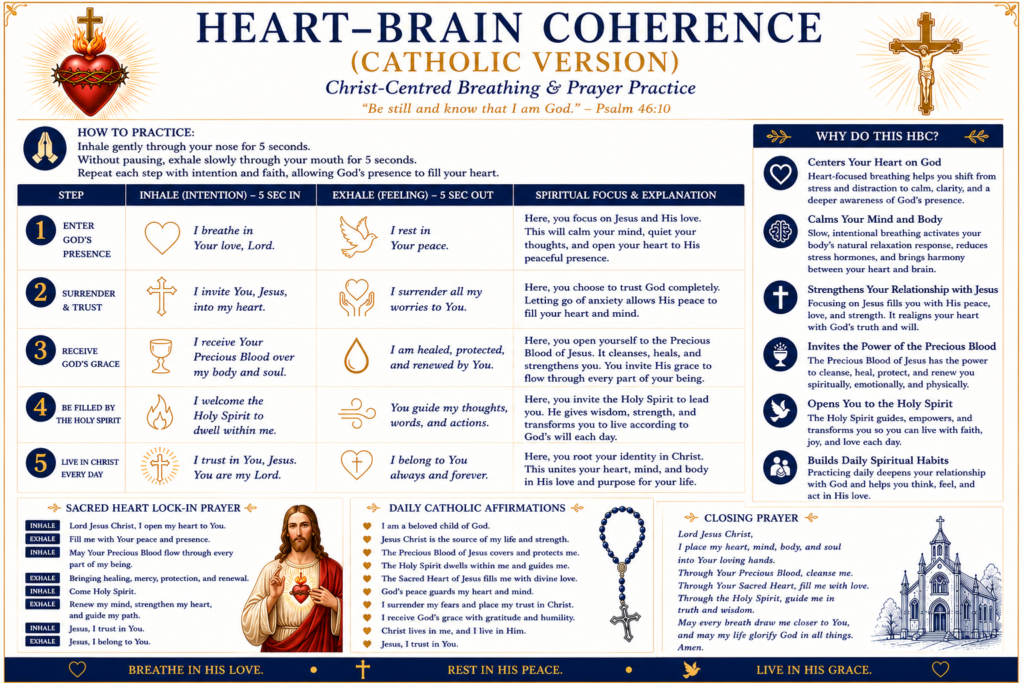
You can download the HD version here:
You can print it, keep it beside your prayer corner, use it during quiet time, or share it with someone who wants to practise stillness without disconnecting from Christ. My hope is not that this becomes just another technique, but that it becomes a small doorway back to prayer.
May every breath lead us back to Jesus.
Jesus, I trust in You.